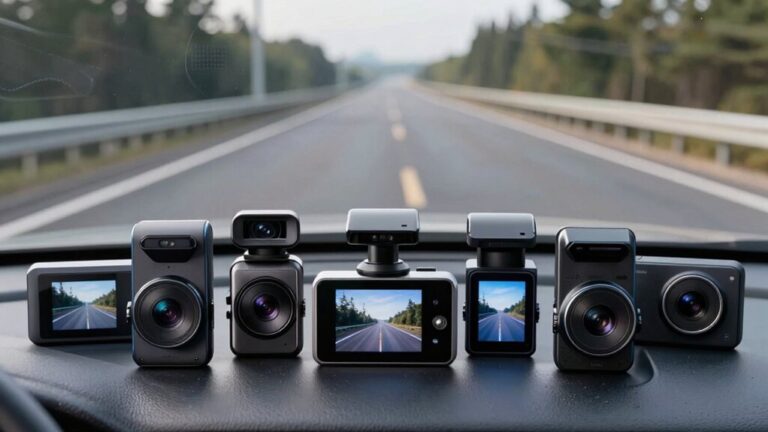

A wireless dash cam is a vehicle-mounted camera that transmits footage to your smartphone or cloud servers via Wi-Fi, Bluetooth, or cellular connectivity—eliminating hardwired display connections. You’ll get real-time access to recordings through companion apps, with resolutions ranging from 720p to 4K Ultra HD. These systems offer features like GPS tracking, AI-powered safety alerts, and automatic cloud backup. Installation is simplified without complex wiring, while dual-camera models capture both road and interior views. This guide explores the connectivity protocols, storage options, and intelligent features that define modern wireless dash cam technology.
Understanding Wireless Dash Cam Technology and How It Works
Wireless dash cams leverage multiple connectivity protocols to eliminate the traditional barriers of physical data transfer and camera configuration. You’ll find these devices utilize Wi-Fi, Bluetooth, and cellular modems (including LTE) to transmit data from camera sensors directly to your smartphone or cloud servers. Wi-Fi enables direct device-to-phone connections for real-time footage access, while Bluetooth handles shorter-range communications. Cellular connectivity powers continuous streaming and automatic cloud uploads without requiring your phone’s presence.
The wireless technology facilitates remote camera management through companion apps, letting you adjust video resolution, motion detection thresholds, and recording parameters instantly. When camera sensors detect impacts or motion triggers, the system automatically flags and uploads critical footage to cloud storage, ensuring evidence preservation even if the device sustains damage or theft. These cameras record footage continuously while your vehicle operates, maintaining constant surveillance of your driving environment. Modern wireless dash cams also feature high-resolution video recording capabilities, with premium models offering 4K quality for comprehensive monitoring and evidence documentation. Advanced models now incorporate GPS tracking capabilities that record location data alongside video footage for comprehensive trip documentation. App connectivity streamlines easy clip sharing, allowing you to quickly transfer and distribute important footage directly from your mobile device. The elimination of wiring during installation reduces interior clutter and simplifies the setup process for drivers. For power cable routing, adhesive cable clips from brands like Thinkware and BlackVue provide a clean installation solution by securing wires to glass or metal surfaces.
Video Recording Capabilities and Quality Standards
When evaluating dash cam performance, you’ll find that video recording capabilities determine how effectively the device captures critical incident details and evidence. Video resolution ranges from 720p to 4K Ultra HD, with 1080p offering ideal balance between clarity and storage efficiency. Higher resolutions enable accurate license plate identification and accident detail documentation but require high-speed microSD cards supporting 20+ Mbps bitrates.
Image stabilization technology minimizes motion blur during vibrations or sudden movements, ensuring smoother footage quality. Wide dynamic range (WDR) enhances visibility in challenging lighting conditions, while 170° field of view captures multiple lanes simultaneously. Frame rates typically operate at 30 fps, balancing fluidity with storage consumption, though premium models like the Viofo A329S now offer 4K 60fps video capture for exceptionally sharp footage of moving objects. Advanced compression algorithms like H.265 reduce file sizes without compromising detail, and GPS overlays embed location data directly onto recordings for forensic reliability. Premium dash cams with Sony Starvis sensors deliver superior night vision performance and enhanced low-light recording capabilities for comprehensive 24-hour protection. 4K Ultra HD recordings deliver unmatched clarity for identifying critical details during incidents, though they require larger capacity SD cards due to significantly increased file sizes. Models featuring dual-channel HDR technology provide balanced exposure across both front and rear cameras, ensuring optimal footage quality in varying lighting scenarios. Top-tier wireless options like the Miofive S1 excel at capturing sharp nighttime footage while maintaining seamless connectivity through integrated app systems. Vehicle-specific options like the FITCAMX Dash Cam offer hidden wiring integration that maintains factory aesthetics while delivering professional-grade recording capabilities.
Wireless Connectivity Options for Seamless Data Access
Modern dash cams leverage multiple wireless protocols to enable instant access to recorded footage without physical cable connections. Wi-Fi connectivity offers the fastest transfer speeds, particularly when using 5GHz networks for high-definition video streaming and cloud integration. You’ll find Wi-Fi optimization essential for real-time live viewing through smartphone apps and remote camera control. Bluetooth pairing provides an energy-efficient alternative, offering quick device synchronization and basic settings management with minimal power consumption. Advanced models incorporate cellular 4G/5G modems for continuous cloud uploads and GPS tracking capabilities. Dual-band Wi-Fi systems balance range and speed by supporting both 2.4GHz and 5GHz frequencies. While Bluetooth excels at low-power tasks, Wi-Fi remains superior for transferring large video files and enabling cloud storage integration. Most dash cameras create their own Wi-Fi hotspot that allows direct smartphone connection through a dedicated app for downloading videos and adjusting settings. Wi-Fi 6 connectivity enables significantly faster file transfers and improved performance for downloading footage from the latest dash cam models. Fleet dash cams utilize cellular modems for wireless connectivity to enable real-time monitoring across multiple vehicles. Premium models like the Blackvue DR970X-2CH LTE Plus feature LTE capability for remote viewing and continuous cloud connectivity without relying on smartphone tethering. The dedicated app interface typically allows users to browse recorded videos, edit clips, and share footage directly from their smartphone without physically interacting with the camera.
Intelligent Safety Features and AI-Powered Monitoring
Beyond wireless data transfer capabilities, today’s intelligent dash cams integrate sophisticated AI algorithms that actively monitor driving behavior and road conditions to prevent accidents before they occur. These systems deliver intelligent alerts for drowsiness detection, distraction monitoring, forward collision warnings, and lane departure prevention. Facial recognition technology identifies authorized drivers while tracking seat belt compliance and mobile phone usage. Advanced in-cab cameras analyze tailgating, harsh braking, and rolling stops in real-time.
You’ll receive immediate audible warnings when risky behaviors are detected, enabling instant correction. Fleet managers leverage automated video tagging and machine learning for driver coaching programs based on detailed event classifications. Multi-camera systems with infrared night vision provide 360-degree coverage, while cloud integration guarantees secure footage storage for thorough safety reviews and incident investigations. Top models combine 4K resolution with multi-camera setups and AI motion detection to capture comprehensive incident recordings from every angle. Customized workflows and gamification tools facilitate coaching at scale, incentivizing safer driving habits through performance-based rewards and recognition programs. Many wireless dash cams now include ADAS dash cam features such as pedestrian detection and GPS tracking, transforming the device from a simple recording tool into a digital co-pilot that provides real-time road monitoring. Premium models equipped with a built-in Clarity polarizer effectively reduce windshield glare and reflections, ensuring clearer video quality in challenging lighting conditions. To maximize continuous operation without draining your vehicle’s battery, consider using motion detection settings that limit recording to necessary times or invest in an external battery pack designed specifically for dash cams. Advanced systems now offer over-the-air firmware updates that ensure your dash cam continuously improves with the latest features and security enhancements without requiring manual installation.
Storage Solutions: Local and Cloud-Based Options
Wireless dash cams offer two primary storage architectures—local microSD card recording and cloud-based solutions—each delivering distinct advantages for data management and accessibility. Local storage utilizes microSD cards (64GB-512GB) for continuous offline recording with loop functionality that automatically overwrites oldest footage. You’ll access recordings through wireless app transfer or physical card removal, though 4K resolution greatly reduces storage duration—256GB typically provides 20-40 hours. Factors such as video resolution, frame rate, and compression also influence how long footage can be stored before older files are replaced. Regular formatting of SD cards through the dash cam’s settings menu helps maintain card health and prevents data corruption caused by continuous writing processes.
Cloud backup automatically uploads footage to encrypted servers, offering unlimited capacity, remote access, and protection against device theft or card corruption. Many models implement hybrid approaches, maintaining complete local storage while prioritizing event-triggered clips for cloud upload. Seamless video retrieval through apps or web portals enables instant access to footage from any device without physical card handling. Models like the COOAU D20S feature Wi-Fi connectivity that simplifies transferring recordings to your smartphone for immediate review or sharing. Premium options such as the BlackVue DR970X-2CH LTE Plus provide integrated LTE for direct cloud uploads without requiring external hotspots or mobile app tethering. Advanced wireless dash cams with GPS receivers embed location coordinates, speed, and route data directly onto video recordings for comprehensive trip documentation. Cloud functionality requires Wi-Fi or LTE connectivity and may incur subscription fees, whereas local storage minimizes ongoing costs but demands manual backup management for ideal data preservation.
Installation Advantages and Flexible Mounting
Unlike traditional hardwired camera systems that require professional routing of cables to external displays, wireless dash cams streamline installation by eliminating the display-to-camera connection entirely—you’ll configure and monitor the device through your smartphone’s dedicated app via Wi-Fi or Bluetooth. This simplified architecture reduces cabin clutter and facilitates repositioning without extensive rewiring.
Mounting techniques include suction cup mounts for temporary placement and adhesive mounts for permanent installations. Wedge mounts enable precise angular adjustment to achieve parallel road alignment. Position your camera behind the rearview mirror to maintain sightlines while ensuring a wide field of view (~120°). For Garmin dash cam users, magnetic disk mounts provide more stable attachment compared to suction cup options that may experience vibrations or suction reliability issues. Modern dash cams with dual-band Wi-Fi enable faster video downloads and more reliable connectivity between your camera and smartphone app.
Installation tips: clean mounting surfaces thoroughly before adhesive application, test wireless connectivity and camera angle before concealing cables, and route power wiring discreetly along windshield edges using adhesive clips or A-pillar trim concealment. Consider using a dual USB adapter if you need to power additional devices while keeping your dash cam connected.
Key Benefits for Personal and Fleet Vehicle Use
What separates wireless dash cams from conventional recording devices is their ability to deliver immediate value through connectivity-driven features that serve both individual drivers and commercial fleet operators. For personal use, you’ll gain instant smartphone access to footage, automatic cloud backup protecting evidence from device theft, and advanced parking mode with motion-triggered recording. GPS integration documents your location and speed data for insurance claims, while dual-camera setups provide thorough front-rear coverage. Companion apps with AI-powered event detection enable seamless video streaming and intelligent incident recognition directly to your mobile device.
In fleet management contexts, wireless dash cams enable proactive driver coaching through real-time alerts and footage review, reducing accidents by up to 30% in safety program administration time. You’ll accelerate incident investigations, decrease false liability claims, and leverage data-driven insights to minimize speeding violations and backup incidents—directly lowering operational costs. Rideshare drivers particularly benefit from dual-camera protection that documents both road incidents and in-vehicle customer interactions for dispute resolution. Choosing professional installation through authorized dealers helps preserve your vehicle warranty coverage, as improper aftermarket wiring can lead to denied warranty claims for affected electrical components.