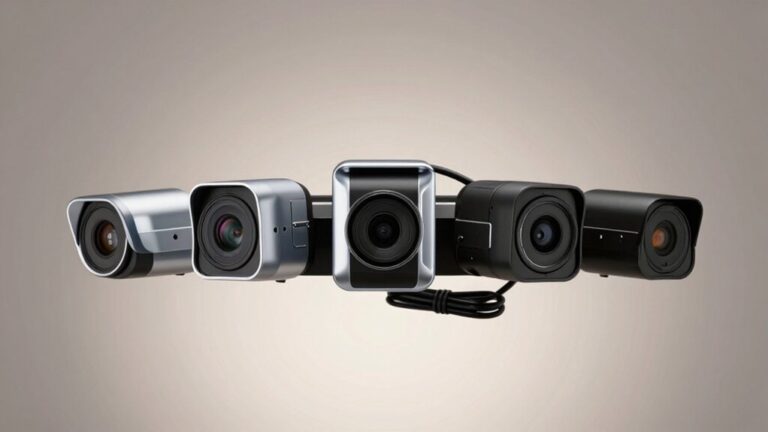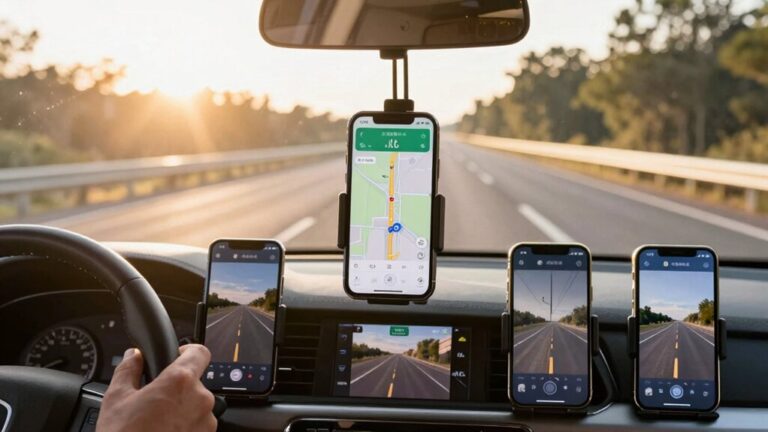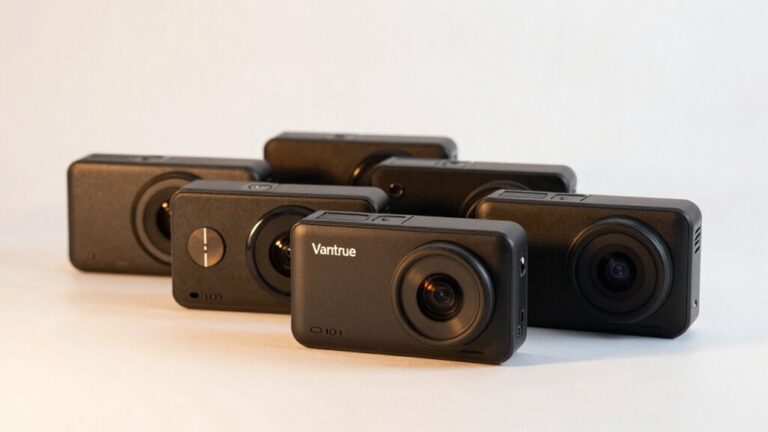

Yes, you’ll find dash cams can record inside your car when they feature dedicated interior-facing cameras, distinct from standard models that only capture exterior views. Multi-lens systems—including dual-channel and three-channel configurations—employ wide-angle lenses (140° to 180°) positioned near your rearview mirror to monitor cabin activity. These systems utilize infrared LED arrays for 24/7 surveillance, enabling monochrome recording in complete darkness with Full HD or 2K resolution. Understanding the technology behind placement strategies, night vision capabilities, and practical applications across different driving scenarios will help you select the best configuration.
Understanding Interior Recording Capabilities of Standard vs. Multi-Lens Dash Cams
When evaluating dash cam options for interior recording, you’ll find that standard single-lens models fundamentally differ from multi-lens configurations in their cabin monitoring capabilities. Standard dash cams primarily capture exterior front views through your windshield, lacking dedicated interior-facing lenses. While they may include microphones for audio capture, video-based interior safety monitoring isn’t available unless you select multi-lens systems.
Multi-lens dash cams integrate dedicated cabin-facing cameras with wide-angle optics and infrared night vision, delivering superior recording quality inside your vehicle. These systems simultaneously record road conditions and passenger interactions through unified storage architectures. The interior cameras typically feature 130° to 170° coverage angles, G-sensors, and motion detection specifically calibrated for cabin monitoring. Advanced models include integrated radar systems that can detect when someone approaches your parked vehicle, automatically triggering recording to enhance security coverage. This thorough approach serves rideshare drivers, parents monitoring child safety, and users requiring complete vehicle security documentation. For optimal performance, these multi-lens systems require USB 3.1 drives with fast read/write speeds to keep up with continuous recording demands from multiple camera feeds. Modern dash cams often incorporate GPS capabilities to embed location and speed data directly into your recordings, adding valuable context to both interior and exterior footage. Many systems use continuous loop recording to ensure uninterrupted footage capture while automatically managing storage capacity by overwriting older files. Interior-facing cameras provide objective documentation that can establish fault and capture driver behavior with time-stamped evidence, proving particularly valuable in accident investigations and legal disputes. Premium dual-channel models like the Viofo A329 combine 4K video at 60fps with Wi-Fi 6 connectivity for fast file transfer and SSD storage compatibility, delivering exceptional image quality for both front and rear recording.
How Dual-Channel and Three-Channel Systems Provide Cabin Monitoring
While single-lens configurations limit your monitoring to forward-facing road capture, dual-channel dash cam systems fundamentally transform vehicle surveillance by deploying independent front and interior cameras that record simultaneously to unified storage. Your interior safety receives thorough protection through wide-angle cabin cameras equipped with infrared night vision, automatically switching between color daytime and IR nighttime modes without disturbing passengers. Three-channel systems extend coverage by adding rear-facing cameras, delivering complete surround documentation at 1080p interior resolution while front cameras capture 4K footage. G-sensor impact detection guarantees footage security by automatically saving critical files during collisions or sudden motion events. Loop recording manages storage efficiently, overwriting old files while preserving incident-triggered segments, giving you continuous cabin monitoring capabilities essential for rideshare operations, fleet management, and family vehicle protection. Modern dash cams incorporate built-in Wi-Fi connectivity allowing you to access and share recorded footage directly through your smartphone for convenient video review and incident documentation. Advanced models like the Vantrue N4 Pro feature HDR and super night vision that enhance low-light clarity, ensuring clear license plate capture even in challenging nighttime conditions. For extended parking mode recording, external battery packs with capacities ranging from 7500mAh to 12000mAh can provide hours of continuous surveillance when your vehicle is parked and the ignition is off.
Interior Camera Placement and Wide-Angle Technology for Complete Coverage
Strategic interior camera positioning determines surveillance effectiveness, with ideal mounting near your rearview mirror providing unobstructed cabin visualization while maintaining compliance with windshield obstruction regulations. Preferred placement leverages existing electrical harnesses near your front console, minimizing installation complexity while maximizing coverage of driver blind spots and passenger areas.
Wide-angle lens technology ranging from 140° to 180° enables thorough single-frame cabin capture across multiple seating rows. Interior camera design typically employs fisheye lenses in models like Viofo systems, sacrificing marginal resolution for complete vehicle interior coverage. Multi-channel dash cam systems integrate interior modules seamlessly with front and rear cameras, enabling synchronized recording across all channels. Processing software manages optical distortion inherent in wide-angle lenses, maintaining usable detail throughout the frame for rideshare monitoring and security applications. The Vantrue N4 demonstrates exceptional value with its infrared cabin camera that provides clear low-light recording alongside front and rear channels. Interior cameras equipped with infrared night vision allow continuous cabin monitoring even in low-light conditions or during nighttime driving. Many interior cameras support Parking Mode functionality, enabling the dash cam to monitor the cabin for impacts or motion even when the vehicle is parked with the engine off. For reliable power supply during extended parking surveillance, hardwiring the dash cam to an ACC fuse ensures automatic activation with the ignition while supporting continuous parking mode operation. When sudden impacts or collisions occur, the G-Sensor automatically locks the current video file to prevent it from being overwritten, preserving critical footage for insurance claims or legal evidence. Advanced systems now incorporate sensor fusion technologies that analyze video data alongside other inputs to enhance monitoring capabilities and provide comprehensive interior surveillance intelligence.
Infrared Night Vision Features for 24/7 Interior Recording
Infrared LED arrays transform interior dash cams into 24/7 surveillance systems by emitting 940nm wavelength light that illuminates cabin spaces without producing visible glow that might disturb occupants or alert potential intruders. These infrared advantages enable monochrome recording in complete darkness, capturing faces, movements, and critical details that standard cameras miss. You’ll achieve nighttime clarity through Full HD 1080p or 2K resolution at 30 fps, with Sony STARVIS sensors enhancing low-light performance on premium models. Wide-angle lenses spanning 160° to 210° guarantee thorough cabin coverage, while HDR and WDR features balance shadows and glare. Motion detection triggers, loop recording, and supercapacitor power options deliver uninterrupted interior surveillance for rideshare drivers, fleet operators, and security-conscious vehicle owners operating during dark hours. Many budget-friendly models now include microSD card support up to 512GB, allowing extended recording periods without overwriting critical footage. Advanced systems like 3-channel dashcam configurations provide comprehensive protection by simultaneously monitoring front, rear, and interior views for maximum security coverage. Premium models featuring advanced parking recording modes can continue monitoring your vehicle’s interior even when parked, providing critical evidence in case of break-ins or vandalism. Some advanced dash cams integrate Lane Departure Warning systems using forward-facing cameras to monitor lane markings and alert drivers who unintentionally drift from their lanes, adding another layer of safety beyond basic recording capabilities. Mirror-mounted systems offer convenient installation with G-sensor impact detection that automatically saves and protects footage when sudden impacts or collisions are detected, ensuring critical evidence is preserved. Modern dash cams with wireless connectivity allow you to instantly review interior footage on your smartphone, making it easier to verify incidents and share evidence without removing memory cards.
Common Applications for Interior Dash Cam Recording Across Different Drivers
Across professional and personal use cases, interior dash cams serve distinct operational requirements that extend beyond simple accident documentation. For ride-sharing operators, you’ll find interior cameras function as critical tools for ride sharing safety, documenting passenger misconduct, fare disputes, and potential harassment incidents. Fleet managers deploy these systems to track driver behavior metrics including fatigue detection, distraction monitoring, and policy compliance verification. You can leverage AI-driven analytics that trigger real-time alerts when unsafe behaviors occur. Parents utilize interior recording to supervise teen drivers, capturing mobile phone usage and attention lapses. Commercial applications often integrate with telematics platforms, reducing insurance premiums through documented risk mitigation. The market’s shift toward AI-powered safety features particularly benefits fleet operators who require advanced monitoring capabilities for driver management. Interior cameras additionally protect against theft, vandalism, and unauthorized vehicle access when parked. When combined with parking mode recording, interior dash cams can capture footage of break-in attempts or suspicious activity even when the vehicle is unoccupied, providing crucial evidence for police investigations. Many systems incorporate motion detection capabilities with adjustable sensitivity settings to automatically activate recording when movement is detected inside the cabin, conserving storage space and battery power. For personal vehicle owners, interior dash cam footage can serve as valuable evidence in accidents to help prove fault and protect against wrongful liability claims. Interior recording systems can also encourage safer driving habits by making drivers more conscious of their behavior behind the wheel. When selecting an interior dash cam, consider models with 1080p Full HD resolution to ensure crisp footage that captures facial details and interior cabin events clearly for legal evidence.