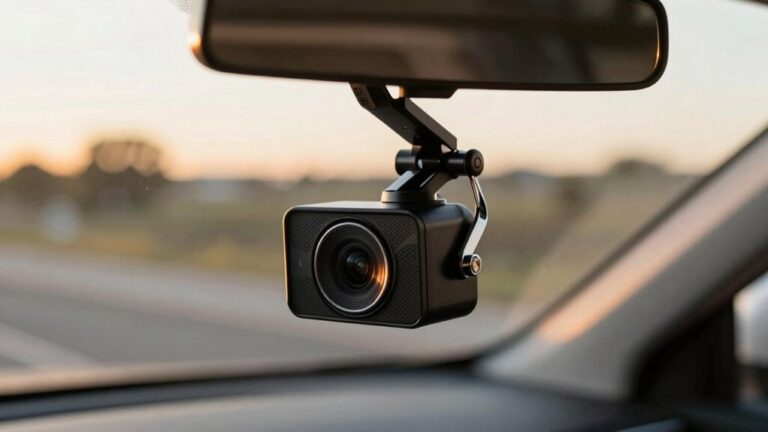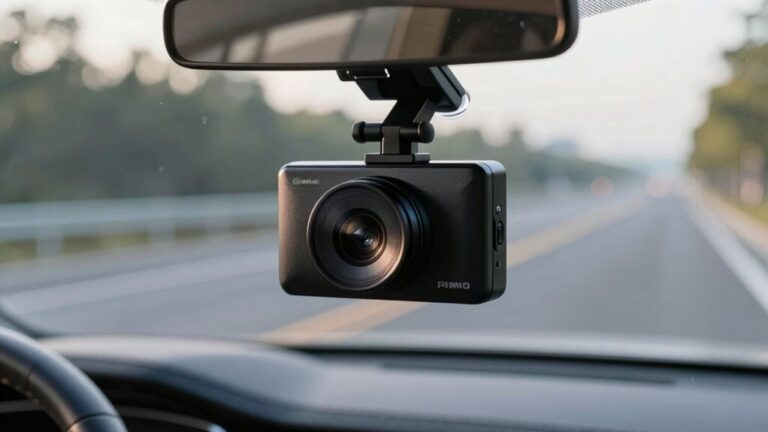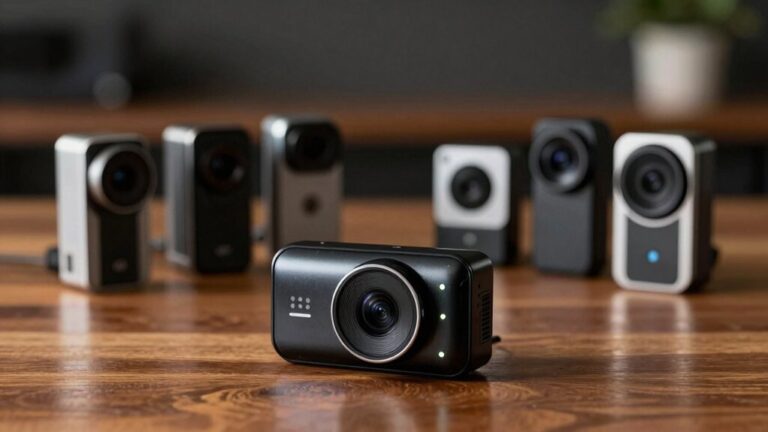

A polarizing filter for your dash cam is an optical attachment that blocks light waves aligned in specific orientations, effectively eliminating glare from windshields, wet roads, and reflective surfaces. It works like microscopic blinds, using long-chain molecules to filter polarized light while protecting your lens from UV radiation, scratches, and contaminants. You’ll experience enhanced color saturation and improved footage clarity, though the filter reduces light intake by approximately 1-2 stops. Understanding ideal usage conditions and adjustment techniques will maximize your filter’s performance benefits.
How Polarizing Filters Work on Dash Cam Lenses
When light reflects off non-metallic surfaces like your windshield or dashboard, it becomes polarized—meaning the light waves align and vibrate primarily in one plane rather than in all directions. A polarizing filter leverages these polarizing principles by using long-chain molecules arranged parallel to each other, functioning like microscopic blinds. This structure creates a specific axis that only allows light waves aligned with it to pass through while blocking perpendicular orientations.
Circular polarizers designed for dash cams incorporate a quarter-wave plate behind the polarizing layer, converting linearly polarized light into circularly polarized light. This guarantees your camera’s autofocus and metering systems function correctly. By rotating the filter, you adjust which angle of light polarization gets blocked, enabling you to selectively reduce glare and reflections from surfaces like roads and windshields. The filter typically results in 2 stops of light loss, which your dash cam compensates for automatically through exposure adjustment. While polarizing filters excel at reducing glare in bright conditions, dash cams also rely on low-light sensitive sensors to capture clear footage when ambient light is limited. By blocking these polarized light waves, the filter delivers clearer, sharper footage with improved color saturation and contrast, especially beneficial in bright daylight or reflective urban environments. This enhanced footage quality serves as crucial evidence during accident investigations, helping to exonerate innocent drivers and resolve disputes more effectively. The real-time footage captured by dash cams with polarizing filters becomes particularly valuable when dealing with fraudulent insurance claims or clarifying fault in collisions. For optimal results, the dash cam should maintain a camera angle that captures approximately 60% road and 40% sky, ensuring balanced exposure and comprehensive scene coverage.
Key Benefits of Using a CPL Filter for Video Quality
Understanding how polarizing filters manipulate light waves reveals why they deliver measurable improvements to your dash cam footage. CPL filters enhance footage clarity by eliminating glare from windshields, dashboards, and wet road surfaces that otherwise cause image washout. You’ll capture sharper license plates, road signs, and vehicle details essential for insurance claims and legal documentation. Color enhancement represents another significant advantage—polarizing filters increase saturation levels, making skies, vegetation, and signage appear more vivid while reducing dullness from reflected light. The filter controls light intensity reaching your camera’s sensor, achieving balanced exposure across varying conditions. From bright sunlight to nighttime artificial lighting, you’ll maintain consistent video quality. These filters work by blocking polarized light that causes unwanted reflections and excessive glare. High-quality dash cam footage can serve as valuable evidence in accidents, helping to prove you were not at fault and protecting your driving record from wrongful liability claims. Additionally, the filter protects your lens from UV radiation, scratches, and contaminants, extending your dash cam’s operational lifespan while reducing maintenance requirements. Many dash cams equipped with wide-degree lenses benefit particularly from polarizing filters since their broader field of view captures more reflective surfaces that can degrade image quality. Modern wireless dash cams with cloud backup capabilities allow you to store your enhanced polarized footage remotely for added security and accessibility. For extended surveillance periods, many dash cams offer time lapse recording that compresses long parking footage into shorter videos by capturing frames at reduced rates. When installing a polarizing filter, ensure it doesn’t violate windshield obstruction rules that govern dash cam placement and visibility requirements in your jurisdiction.
When and Where Polarizing Filters Make the Biggest Difference
While CPL filters deliver benefits across various scenarios, their effectiveness varies dramatically based on sun position, driving conditions, and environmental factors. You’ll experience peak performance during morning and evening commutes when low-angle sunlight creates intense windshield and dashboard reflections. The filter works best when sunlight hits at approximately 90 degrees to your camera’s line of sight, considerably reducing glare from wet pavement and urban reflections off glass buildings and vehicles.
Highway driving in direct sunlight provides the most visible impact, improving clarity of road signs and surrounding traffic. However, you’ll need to adjust filter rotation as sunlight angles change throughout your drive. The rotating mechanism allows you to fine-tune reflection levels as lighting conditions shift during your journey. Modern dash cams with ADAS safety features can work alongside polarizing filters to provide both clearer recordings and real-time hazard detection. Advanced systems use sensor fusion technologies to combine polarized video data with other inputs for enhanced accident prevention capabilities. For fleet operators and professional drivers, combining polarizing filters with cameras featuring GPS tracking enables comprehensive incident documentation with improved visual clarity. Many modern systems now incorporate cloud storage capabilities that automatically backup your enhanced footage for remote access and safekeeping. Top brands like BlackVue offer dash cameras specifically designed to work seamlessly with polarizing filters for optimal performance. Overcast conditions offer minimal benefit, while nighttime usage isn’t recommended since polarization reduces critical light intake, potentially degrading image quality.
Protecting Your Dash Cam Lens With a Polarizing Filter
Beyond its glare-reduction capabilities, a polarizing filter serves as a critical protective barrier for your dash cam’s lens assembly. The hardened glass or multi-coated surface shields against scratches, fingerprints, and debris accumulation that degrade optical clarity. This additional lens protection reduces direct lens contact during cleaning, minimizing accidental damage risks.
Filter compatibility considerations guarantee proper fitment for specific dash cam models, maintaining secure attachment without exposing lens edges. The protective layer absorbs minor impacts from airborne particles while preserving image quality through anti-reflective coatings.
Replacing a damaged filter costs considerably less than lens repair or unit replacement. Most designs feature tool-free installation, allowing quick attachment without technical expertise. The filter also protects against fingerprints and dirt, reducing the need for frequent cleaning. Maintaining clear optical components ensures your dash cam captures high-quality video footage that can be used for driver coaching and accident documentation. A CPL filter also improves visibility of key details like license plates during rainfall by reducing water-related glare and reflections. For continuous operation, many users combine protective filters with hardwire kits that connect directly to the vehicle’s fuse box, enabling parking mode surveillance when the engine is off. If footage becomes compromised, you can connect your smartphone to the dash cam’s Wi-Fi network to review recordings and verify image quality. Regular lens cleaning with a microfiber cloth helps maintain optimal image quality when using protective filters. This dual-function accessory extends your dash cam’s operational lifespan while maintaining recording clarity under varied environmental conditions.
Understanding the Limitations of Polarizing Filters
Despite their optical advantages, polarizing filters impose significant constraints on dash cam performance that you’ll need to contemplate before installation. The most critical filter drawback involves reduced low light performance—CPL filters inherently block specific light waves, causing underexposed footage during nighttime, overcast conditions, or tunnel driving. You’ll experience darker video with diminished detail when ambient illumination is already limited.
Additional challenges include angle sensitivity requiring constant manual adjustment as sun position changes, potential vignetting with thick filters on wide-angle lenses, and limited effectiveness during cloudy weather when polarized reflections are minimal. Road vibrations may shift filter alignment over time, necessitating periodic re-adjustment. Moreover, fingerprints and dust accumulation on the filter surface degrade image clarity, adding maintenance requirements that compromise the convenience dash cams typically provide. The filter reduces light by approximately 1-2 stops, which can impact exposure settings in already challenging lighting scenarios. The added physical bulk of a polarizing filter may also increase the dash cam’s power consumption, potentially drawing additional current from your vehicle’s electrical system during operation. Unlike dash cams equipped with supercapacitors for heat resistance, models with polarizing filters may experience additional thermal stress when the filter’s physical presence traps heat against the camera lens in high-temperature vehicle environments. It’s also important to verify that mounting your dash cam with a filter attachment doesn’t obstruct the driver’s line of sight, as this could violate state-specific regulations even if the device itself is legal. For models with advanced sensors like dual Sony STARVIS 2, the light-blocking effect of polarizing filters may counteract some of the low-light sensitivity benefits these imaging technologies are designed to provide. For optimal nighttime recording without the lighting limitations imposed by polarizing filters, consider models with advanced HDR capabilities that enhance clarity in challenging conditions.