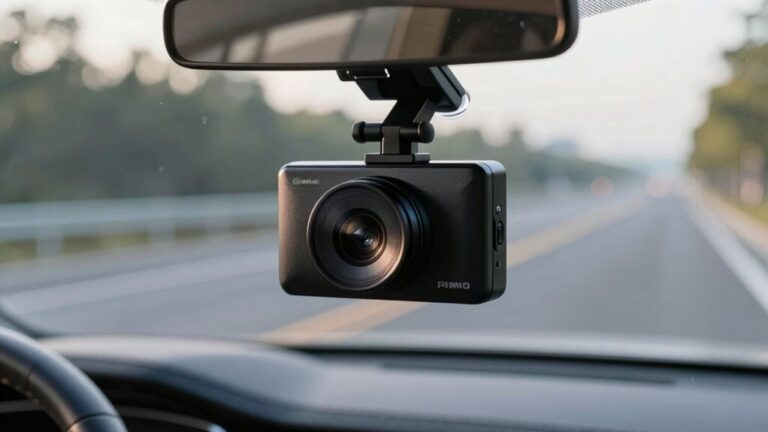

You’ll want to prioritize resolution based on your documentation needs—1080p handles general usage, while 4K captures distant license plates more effectively. Consider whether single-channel simplicity suits you or if multi-channel coverage from front, rear, and cabin angles better protects your interests. Evaluate smart connectivity features like Wi-Fi 6 for quick transfers and LTE for cloud backup. Don’t overlook parking mode with motion detection, which monitors your vehicle when you’re away. Factor in storage requirements, installation complexity, and budget constraints when selecting core versus premium capabilities. Below, we’ll break down each consideration in thorough detail.
Understanding Video Quality and Resolution Options
When selecting a dash cam, resolution stands as the primary determinant of video quality and the detail you’ll capture during incidents. You’ll find options ranging from 720p to 4K, each presenting distinct resolution trade-offs. While 1080p delivers adequate video clarity for general use, 2K provides sharper detail extraction without excessive file sizes. 4K offers superior clarity for distant license plates and road signs, though it imposes substantial processing demands and requires class 10 or UHS-I SD cards. Storage strategies become critical as 4K files consume considerably more space than 1080p, necessitating 64GB+ cards and frequent overwriting cycles. Higher resolutions also generate increased heat and power consumption, potentially affecting device longevity in demanding environments. The quality of the lens itself plays a significant role in capturing high-resolution images, regardless of the pixel count you select. Advanced models feature dual 4K+1080P resolution for simultaneous front and rear recording, providing comprehensive coverage of road incidents from multiple angles. Models like the Miofive S1 Ultra demonstrate how dual front/rear coverage with 4K capability enhances overall vehicle security. Premium dash cams now incorporate Sony STARVIS 2 sensors to deliver exceptional low-light performance and enhanced image quality in challenging nighttime conditions. Top-tier models like the Viofo A329S now support 4K 60fps video capture, producing exceptionally sharp footage of moving objects with superior temporal clarity. Many modern dash cams also include voice control functionality, allowing drivers to manage recordings and settings without taking their hands off the wheel. Consider your specific needs when balancing these technical factors.
Single vs. Multi-Channel Camera Systems
Channel configuration represents one of the most consequential decisions you’ll make when purchasing a dash cam, directly impacting your vehicle’s surveillance coverage and evidence-gathering capabilities. Single channel benefits include simplified installation, lower upfront costs, and straightforward operation with one forward-facing camera documenting front-end collisions and traffic violations. However, multi channel advantages substantially outweigh these conveniences through thorough coverage capturing rear-end impacts, hit-and-runs, and surrounding vehicle behavior from multiple angles simultaneously. Dual-channel systems integrate smaller, more discreet rear cameras while managing footage on unified memory cards, eliminating the complexity of operating separate devices. Though multi-channel units command higher initial investment, they’re more cost-effective than purchasing multiple single-channel cameras while delivering critical evidence from reduced blind spots—essential for insurance claims and legal proceedings in complex crash scenarios. Modern dual-channel models feature dual front and rear camera coverage with advanced capabilities like 4K video resolution and reliable low-light recording for comprehensive documentation in varying conditions. Top-rated models like the Viofo A329S combine 2K resolution with HDR technology and voice control for enhanced image quality and ease of use. For ride-share drivers and families requiring interior monitoring, triple-camera systems add infrared night vision cabin surveillance to front and rear recording for complete vehicle coverage. When evaluating power options, dash cams equipped with supercapacitors rather than batteries offer superior heat resistance and longer lifespans, particularly important for vehicles exposed to extreme temperatures. To ensure your footage is admissible in court, maintain a clear chain of custody and avoid any alterations to the recorded video. If you’re considering future rear recording, it’s advisable to order a dual-channel camera from the outset since single-channel models cannot be upgraded to dual-channel functionality.
Smart Connectivity and Cloud Features
As connectivity technologies transform automotive accessories into networked devices, modern dash cams leverage Wi-Fi, Bluetooth, and cellular capabilities to deliver unprecedented convenience and functionality beyond basic recording.
Wi-Fi 6 enables 30MB/s transfer speeds for wireless file retrieval, eliminating microSD card removal. Bluetooth Low Energy 5.0 facilitates device pairing and remote control through manufacturer apps compatible with Android and Apple ecosystems. You’ll find companion apps offering live feeds, incident management, and remote settings adjustments. Built-in Wi-Fi integration enables seamless connectivity for GPS tracking and video access without additional hardware requirements.
LTE-connected models provide real-time streaming, GPS tracking, and automatic cloud backup through subscription-based services. Smart technology features include AI-powered incident detection, voice activation, and multi-camera display modes. Hands-free voice control enables drivers to save footage or activate recording without physical interaction with the device. Premium models now incorporate parking mode recording that monitors your vehicle even when the engine is off, providing comprehensive security coverage. Advanced cameras with cloud connectivity offer encrypted storage solutions that protect footage from tampering or loss in the event of vehicle theft. 4G LTE-enabled units eliminate Wi-Fi dependency, making them ideal for comprehensive vehicle monitoring in locations without traditional network access. OBD-II integration correlates vehicle telemetry—speed, braking force, engine diagnostics—with footage for enhanced analysis. Cloud services deliver encrypted storage, geofencing alerts, and remote parking mode notifications, enabling thorough vehicle security monitoring. Top-rated models feature dual-channel recording capabilities that capture both front and rear perspectives simultaneously for complete accident documentation.
Parking Mode and Motion Detection Capabilities
While dash cams excel at capturing incidents during active driving, parking mode functionality transforms them into 24/7 security systems that protect your vehicle when you’re away. Motion detection activates recording when movement is sensed, with adjustable motion sensitivity levels reducing false triggers from shadows or wind. Premium models incorporate AI filtering to distinguish genuine threats from benign activity.
Impact-triggered recording via G-sensors captures collision events, while radar detection offers superior precision with minimal power consumption—extending monitoring periods to several weeks when paired with battery packs. Time-lapse and low bitrate modes conserve storage and energy but sacrifice video smoothness. For thorough coverage, multi-channel systems monitor front, rear, and cabin angles. Modern dash cams with parking mode enter a low-power standby state and only activate when motion or impact is detected, ensuring round-the-clock protection without draining your vehicle’s battery. Some advanced models feature collision detection that works seamlessly with parking mode when connected through a hardwire kit, automatically saving footage when an impact occurs. Hardwiring your dash cam to the vehicle’s electrical system provides uninterrupted power for continuous surveillance, which is especially valuable in parking lots where eyewitnesses are scarce. External battery packs offer an alternative power solution that prevents draining your car’s main battery while enabling extended parking mode operation. Prioritize 1080p minimum resolution with night vision capabilities to guarantee license plates and faces remain identifiable in low-light conditions. The recorded footage proves invaluable for insurance claims and police reports when documenting incidents like vandalism or hit-and-runs. Before sharing footage with your insurer or authorities, ensure your videos are authentic and untampered to maintain their admissibility in potential legal proceedings.
Installation Requirements and User Interface
Proper installation determines whether your dash cam delivers reliable footage or becomes a liability that obstructs your view and violates traffic laws. Your mounting position should place the camera behind the rearview mirror at windshield center, maximizing coverage while avoiding driver sightline obstruction. State regulations typically restrict device size and location, so verify local compliance before installation. Many states limit windshield placement to specific zones, such as under 5 inches on the driver’s side or 7 inches on the passenger’s side, to comply with obstruction of view laws. Cable routing requires tucking wires behind the headliner and down the A-pillar using trim tools and adhesive clips, ensuring cables avoid airbag deployment zones. Hardwiring to the fuse box enables parking mode functionality, while 12V outlets offer simpler power access. For hardwired installations, a fuse tap allows safe connection to the vehicle’s fuse box without splicing or damaging original wiring. Before mounting, thoroughly clean the installation area to ensure adhesive films or suction cups attach securely and maintain a stable connection. Adhesive mounts provide a long-term, low-profile installation with minimal vibration compared to other mounting options. A high endurance memory card is essential for reliable recording performance and longevity under continuous operation. Hardwire kits typically include wires, fuses, and sometimes a voltage cut-off feature to prevent car battery drainage during extended use. For user interface, touchscreen displays and mobile apps via Bluetooth or Wi-Fi provide convenient access to settings, firmware updates, and video downloads without distraction during operation.
Budget Planning and Feature Prioritization
How much should you actually spend on a dash cam when models range from $30 budget units to $250 professional-grade systems? Effective budget allocation starts with identifying essential versus optional features. Prioritize 1080p minimum resolution, loop recording, and G-sensor protection—these core capabilities appear in $50-$130 models offering superior value. Feature evaluation should weigh 4K recording against faster 1080p frame rates based on your specific needs. Factor in mandatory expenses like high-speed microSD cards (64GB-256GB, U3/V30 rated) that aren’t included with most cameras. GPS tracking and dual-channel coverage enhance functionality but increase costs considerably. Hardwiring kits enable parking mode surveillance yet remain optional for basic operation. For extreme weather conditions, models with supercapacitors rather than batteries prevent overheating and handle temperature fluctuations more reliably. Consider whether you need dual channel dash cams that record both front and rear simultaneously, which provide more comprehensive incident documentation than single-camera setups. Premium models like the VIOFO A329 offer 4K 60fps video quality with dual Sony STARVIS 2 sensors for exceptional clarity in both daylight and low-light conditions. High-quality dash cams ensure reliable license plate capture even during nighttime driving or in challenging lighting scenarios. Advanced systems with cloud integration provide real-time alerts and remote access to footage from anywhere via smartphone apps. Battery-saving technologies like radar motion detection activate recording only when movement is detected near your vehicle, extending parked surveillance duration without draining power. Avoid overspending on premium features like cloud storage unless your use case demands them.