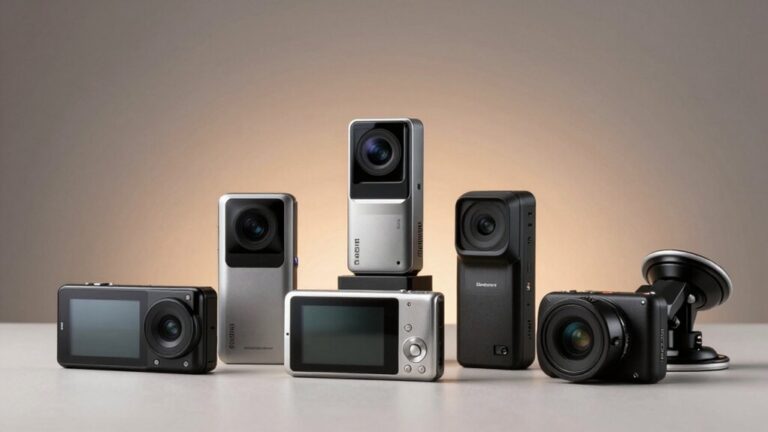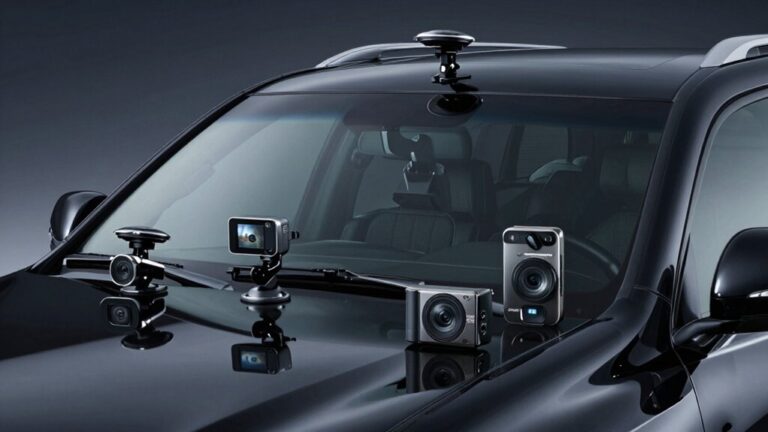

Dash cams absolutely work for parking lot accidents, providing objective video evidence that resolves liability disputes quickly. When equipped with parking mode, your dash cam’s motion sensors and G-sensors automatically record impacts, vandalism, and hit-and-run incidents while you’re away. The footage captures critical details like license plates, vehicle positions, and impact angles that eyewitnesses often miss. Insurance claims backed by dash cam evidence resolve 35% to 50% faster and yield 40% higher settlement success rates. Understanding which features and power solutions maximize your protection will guarantee you’re covered when incidents occur.
How Dash Cams Provide Objective Evidence in Parking Lot Incidents
When parking lot accidents occur, dash cams eliminate the uncertainty that plagues traditional investigations by capturing unfiltered visual records of exactly what happened. Your camera’s continuous recording documents critical details like vehicle positions, impact angles, and driver behaviors that determine fault. This visual documentation proves far more reliable than conflicting eyewitness accounts or fading memories.
Courts and insurance adjusters recognize the evidence credibility of dash cam footage, often treating it as the definitive account of incident sequences. You’ll find that video proof showing the exact moment of collision resolves disputes quickly, whether you’re dealing with multi-vehicle scenarios or straightforward backing collisions. The objective nature of this technology means you’re protected by verifiable facts rather than subjective interpretations when liability questions arise. Advanced models offer features like cloud connectivity that allow for real-time incident notifications and remote footage access. While dash cam footage helps prove you’re not at fault, this primarily protects your driving record rather than providing immediate insurance discounts. Many modern vehicles come equipped with built-in cameras, expanding the availability of video evidence in parking lot incidents. Many dash cams feature parking mode recording that captures footage even when the vehicle is parked and the engine is off, ensuring comprehensive coverage of incidents that occur while you’re away from your vehicle. The recorded footage also serves as protection against fraudulent insurance claims, providing clear evidence that can prevent false allegations and protect you from liability in staged accident scenarios. Dash cams can effectively record through tinted windshields, though lighter tint levels and proper camera placement ensure the clearest footage quality for reviewing parking lot incidents.
Understanding Parking Mode and Motion Detection Technology
While your vehicle sits unattended in a parking lot, parking mode technology transforms your dash cam into an intelligent surveillance system that activates recording only when threats emerge. Motion detection sensors monitor your camera’s field of view, triggering recording when people or objects approach your vehicle. G-sensors detect physical impacts from collisions or vandalism, automatically saving protected footage that won’t be overwritten.
This dual-sensor approach conserves storage and battery power by recording only critical events rather than hours of empty footage. Your dash cam remains in low-power standby until activated, with voltage cutoff features preventing battery drain. Advanced systems filter irrelevant motion like swaying trees, focusing parking surveillance on genuine security threats while capturing pre-event footage for thorough evidence documentation. Some dash cams offer time-lapse recording as an alternative parking mode that captures frames at set intervals, reducing storage requirements while maintaining coverage of extended parking periods. The recorded footage includes timestamps and GPS data that provide crucial context for insurance claims and law enforcement investigations. Most dash cams use loop recording to automatically overwrite the oldest footage once the memory card is full, ensuring continuous operation without manual intervention.
To enable parking mode functionality, many modern dash cams require either hardwiring to a continuous power source or connection to an external battery pack, allowing them to monitor your vehicle even after the ignition is turned off. Higher-end models with 4K video quality deliver crystal-clear footage that can capture license plates and other critical details even in challenging parking lot lighting conditions. Budget-friendly options like the Nextbase 222 include infrared night vision specifically designed for parking recording in dark conditions.
Capturing Hit-And-Run Drivers With Dash Cam Footage
Hit-and-run accidents in parking lots occur every 43 seconds across the United States, making video documentation your most reliable tool for identifying fleeing drivers and establishing liability. Your dash cam‘s front and rear cameras capture critical evidence including license plates, vehicle descriptions, and collision dynamics that law enforcement needs to locate responsible parties. Modern dash cam integration with GPS tracking, timestamping, and automatic motion detection guarantees incidents record even when you’re away from your vehicle. This footage proves invaluable for both criminal prosecution and insurance claims, as courts rely on objective video evidence to determine fault and enforce driver accountability. High-definition recording at 30 FPS enhances license plate recognition, while cloud backup features preserve evidence against tampering or loss during investigations. Quality dash cams record at 1280×720 resolution to ensure clear documentation of parking lot incidents and collision details. Dash cam footage can also protect drivers from fraudulent claims by providing objective evidence that reduces reliance on conflicting eyewitness accounts. By serving as an impartial eyewitness, dashcam recordings help refute staged accidents and false claims of damage that may occur in parking lot scenarios. The time-stamped documentation captured by dash cams establishes the precise sequence of events, showing driver behavior before, during, and after the incident to support your legal claims. Advanced dash cams with parking mode surveillance continue monitoring your vehicle even when the engine is off, automatically activating to record any impact or movement around your car. Models with wide fields of view and good night vision ensure comprehensive coverage of parking lot incidents regardless of lighting conditions or camera angles.
Protecting Yourself From Staged Accidents and Insurance Fraud
Staged accidents and insurance fraud schemes target parking lots with alarming frequency, costing drivers and insurers billions annually through fabricated collisions and exaggerated damage claims. Your dash cam provides vital fraud prevention by capturing objective video evidence that reveals the actual vehicle positions, driver actions, and timing of incidents. This footage exonerates drivers in approximately 45% of disputed cases, challenging staged claims before they escalate into costly payouts.
You’ll benefit from significant financial protection—businesses report up to 86% reduction in accident-related costs and average savings of $5,000 annually per vehicle. Insurance companies increasingly accept dash cam videos as definitive proof, expediting claim processes while deterring fraudsters. The footage enables detailed crash reconstruction, helping law enforcement identify intentional collisions and disproving fabricated scenarios that could otherwise result in nuclear verdicts. However, it’s advisable to consult a lawyer before submitting such videos to ensure proper authentication and handling of the footage. Beyond documentation, dash cams actively promote safer driving behaviors through real-time monitoring and driver coaching capabilities. Connected dashcams with actionable dashboards deliver real-time feedback and statistics that help fleet managers monitor parking lot incidents as they occur. Advanced dash cams equipped with AI capabilities can detect and alert you to suspicious behaviors around your parked vehicle, including vandalism or theft, providing an additional layer of security. Modern dash cams with infrared LEDs and Sony STARVIS sensors deliver crystal-clear footage in low-light parking lot conditions, ensuring you capture crucial evidence even during nighttime incidents. Advanced image processing algorithms such as WDR and HDR further enhance footage quality by improving brightness, contrast, and clarity while reducing noise in challenging lighting scenarios.
The Role of Dash Cams in Streamlining Insurance Claims
Beyond fraud prevention, dash cams fundamentally reshape how insurance companies process and resolve claims after parking lot accidents. Your claims backed by video evidence resolve 35% to 50% faster than those without, as footage analysis enables adjusters to determine fault quickly and objectively. You’ll experience considerably improved claim outcomes—video evidence yields a 40% higher chance of favorable settlements by eliminating disputes over conflicting witness statements.
The objective documentation proves invaluable during fault determination, as your footage provides repeatedly reviewable evidence that courts and insurers trust. You’re protected against wrongful liability while insurers close cases more efficiently, reducing legal fees and litigation time. Modern dash cams with GPS integration can timestamp and geolocate incidents, providing additional layers of verification for your parking lot accident claims. Key features like dual-camera setups ensure you capture both front and rear coverage, particularly important in parking lot scenarios where accidents can occur from any direction. Some insurance providers may even offer potential insurance discounts for drivers equipped with dash cams, rewarding the proactive approach to documentation and responsible driving behavior. With cloud storage capabilities, your footage automatically uploads to secure servers when incidents are detected, protecting your evidence even if the dash cam itself is damaged or stolen during the accident. Advanced models now include built-in microphones that capture audio alongside video, preserving conversations and verbal exchanges that occur immediately after parking lot incidents. The footage can demonstrate traffic violations such as failure to yield, improper backing, or distracted driving that commonly occur in parking lot environments. This transparency benefits everyone: your anxiety decreases, processing accelerates, and accuracy improves throughout the entire claims process, fundamentally transforming parking lot accident resolutions.
Front and Rear Camera Coverage for Complete Protection
Parking lot accidents occur from multiple directions simultaneously, making single-camera systems inadequate for thorough protection. You’ll need front and rear cameras to capture the complete incident sequence. Rear camera benefits include documenting rear-end collisions—the most common parking lot accident type—and identifying hit-and-run suspects exiting behind you. Front cameras record forward approach incidents and impacts while entering spaces.
Dual camera advantages extend beyond basic coverage. Synced recordings from both angles provide coherent timeline reconstruction, eliminating disputes about fault through extensive visual evidence. You’ll capture precise impact points and surrounding context that single cameras miss. This multi-angle documentation proves essential for fraudulent claim prevention and expedites legal investigations. High-resolution dual systems identify license plates and driver actions from either direction, ensuring no critical evidence gaps during parking lot events. Models equipped with Sony STARVIS 2 sensors deliver superior night and low-light recording performance, which is particularly valuable in dimly lit parking structures where many incidents occur. Many dual dash cams feature a built-in G-sensor that automatically detects sudden impacts and saves the footage in a protected folder, preserving crucial evidence from parking lot incidents. The customizable sensitivity settings allow you to adjust the G-Sensor threshold to prevent false triggers from minor bumps while ensuring genuine impacts are always captured. Some systems offer low bitrate recording options that extend recording time on the SD card by compressing footage more aggressively, though this results in reduced video clarity compared to standard quality modes. Advanced dual camera systems now include parking mode with collision detection that enables 24-hour surveillance even when your vehicle is unattended, automatically recording when motion or impact is detected. 20% of dash cam owners found their footage helpful when filing insurance claims, demonstrating the practical value of comprehensive camera coverage in resolving parking lot incidents.
Power Solutions for Continuous Parking Lot Monitoring
While dash cams excel at recording incidents during active driving, their effectiveness in parking lots hinges entirely on reliable power delivery when your vehicle sits idle. You’ll need to evaluate three primary hardwiring options: direct connection to your fuse box, OBD-II port installation, or dedicated external battery packs. Professional hardwiring provides uninterrupted power for 24/7 surveillance without the voltage lapses common to cigarette lighter adapters.
Critical to parking mode success is proper battery management. Advanced systems incorporate voltage cutoff features that shut down at thresholds like 11.9V, preventing no-start scenarios. Smart power management balances continuous recording against battery preservation—some radar-based systems consume just 1 milliampere, enabling year-long operation. External battery packs eliminate draw from your vehicle’s main battery while supporting multi-camera setups, recharging automatically when you drive. Hardwiring promotes a cleaner vehicle interior by tucking cables away neatly, reducing the visual evidence of dash cam equipment that might attract unwanted attention.
Video Quality and Storage Requirements for Effective Recording
When incident documentation determines liability in parking lot collisions, your dash cam’s video resolution becomes the decisive factor between successful claims and dismissed evidence. You’ll need minimum 1080p Full HD for readable license plates, though 4K provides superior detail for high-stakes situations. Sony Starvis sensors deliver essential video clarity in low-light conditions, while HDR support captures nighttime incidents effectively.
Storage optimization requires balancing quality with capacity. Support for 512GB microSD cards enables extended parking mode surveillance, while loop recording prevents storage gaps. Higher frame rates (60fps) capture rapid impacts with fluid precision but generate larger files. Time-lapse recording condenses hours into reviewable segments, reducing storage demands. Emergency file protection systems preserve vital footage from accidental deletion, ensuring your evidence survives when you need it most. G-sensor lock safeguards critical files from being overwritten during loop recording cycles, providing additional protection for impact-related footage.
Legal Admissibility of Dash Cam Evidence in Accident Cases
Unless your dash cam footage meets specific legal standards, courts and insurance companies will reject it as inadmissible evidence regardless of what it captures. Dashcam authentication requires you to prove the footage is original and unaltered, showing the specific time, location, and events of your parking lot accident. You’ll need to demonstrate proper device installation, functioning timestamps, GPS coordinates, and complete metadata. Footage legality demands compliance with privacy laws, particularly regarding audio recordings. Courts follow Federal Rule of Evidence 901 standards, requiring you to establish who recorded the footage and under what circumstances. You must provide original files without editing, cropping, or manipulation. Clear visual quality is essential—blurry or poorly lit footage won’t support your claim effectively. Secure storage and backup of your dashcam footage enhances its credibility as evidence in parking lot accident cases.
Essential Features to Look for in a Parking Lot Dash Cam
Because parking lot accidents often occur when you’re not present, your dash cam must include dedicated parking mode capabilities that maintain surveillance during extended periods. You’ll need motion and impact detection sensors that automatically trigger recording when collisions or suspicious activity occurs near your vehicle. Essential dash cam features include 4K Ultra HD resolution for capturing license plates and faces clearly, plus wide-angle lenses that eliminate blind spots around your car.
For peak parking lot safety, prioritize models with G-sensors that lock critical footage to prevent overwriting, hardwire kits that won’t drain your battery, and real-time smartphone alerts when incidents occur. Built-in GPS provides time-stamped, geo-tagged evidence that’s invaluable for liability determination and insurance claims following parking lot accidents. Time-lapse recording helps conserve storage space while still documenting all activity around your parked vehicle throughout the day.