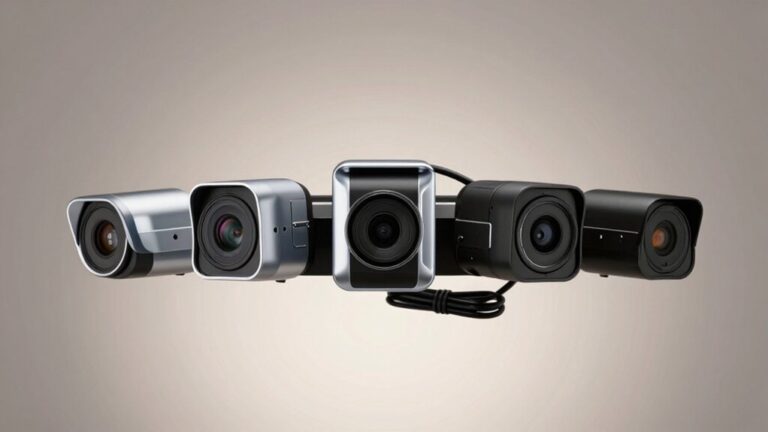

Yes, wireless dash cams are widely available and use Wi-Fi, Bluetooth, or LTE cellular connections to transmit footage without physical cables. You’ll find models ranging from budget options like the 70mai series to premium fleet solutions such as the Blackvue DR970X-2CH LTE Plus with real-time cloud sync. These devices connect to your smartphone for remote viewing, automatic uploads, and instant incident access. Modern units combine multiple wireless protocols for enhanced reliability while offering features like GPS tracking, parking mode, and AI safety alerts. The specifications and capabilities vary greatly across price points and intended applications.
Understanding Wireless Dash Cam Technology and Connectivity Options
Wireless dash cams transmit video and data through Wi-Fi, Bluetooth, or cellular connections rather than physical cables, though you’ll still need power wiring in most configurations. Wireless technology enables direct smartphone pairing for footage transfer without removing microSD cards. Connectivity methods vary by use case: Wi-Fi handles high-bandwidth video downloads, while Bluetooth manages short-range device pairing but lacks sufficient bandwidth for continuous uploads. Fleet-oriented models integrate LTE cellular modems for constant internet access and real-time cloud synchronization. Hybrid systems combine multiple protocols—Wi-Fi for local transfers, cellular for remote monitoring, and Bluetooth for initial device setup—maximizing reliability across different scenarios. Modern dash cams increasingly feature Wi-Fi 6 connectivity for faster file transfers and more efficient wireless performance. Advanced models now offer 5G Wi-Fi transfer capabilities that enable rapid transmission of high-resolution 4K video files to your smartphone or cloud storage. Premium wireless dash cams now support cloud backup functionality that automatically uploads critical footage to secure online storage for safekeeping. Many wireless models offer adjustable mount designs that accommodate different windshield angles to ensure optimal camera positioning and maintain clear wireless signal transmission. Some systems include GPS tracking capabilities that record location data alongside video footage for comprehensive trip documentation. Understanding these connectivity options helps you select appropriate dash cam specifications matching your data access requirements and network infrastructure.
Video Quality and Recording Capabilities of Modern Wireless Dash Cams
Once you’ve established the right connectivity infrastructure for your wireless dash cam, recording performance becomes your primary concern. Video resolution determines detail capture—4K models like the Viofo A329 deliver superior clarity compared to 2K alternatives, though you’ll face larger file sizes requiring high-capacity storage. Frame rates notably impact motion clarity; 60fps at 4K produces smoother footage with reduced blur versus standard 30fps operation. Low light performance depends heavily on sensor sensitivity—Sony Starvis sensors provide exceptional night recording through advanced noise reduction. HDR capabilities balance exposure in challenging lighting, rendering license plates readable in mixed conditions. Field coverage typically spans 140° to 170°, with dual-camera systems offering thorough front-rear monitoring. Advanced models now incorporate AI-powered safety features including collision warnings, blind spot detection, and lane departure warnings that actively enhance driver safety beyond simple recording. The Miofive S1 stands out among wireless options with its sharp footage capabilities that maintain quality even in nighttime conditions and seamless app integration. Parking protection features monitor your vehicle when stationary, detecting motion or impacts to automatically trigger recording. Stabilization methods vary considerably, affecting usability during vehicle movement. Some wireless dash cams offer voice control functionality, allowing drivers to save important footage or adjust settings hands-free while maintaining focus on the road. The Rexing DT2 features a 170° ultra-wide field of view combined with advanced night vision through its F1.8 aperture, making it a strong contender for comprehensive coverage. Many models include loop recording capability that automatically overwrites older footage when the memory card reaches capacity, ensuring continuous operation without manual intervention.
Power Solutions and Installation Flexibility for Wireless Systems
Despite wireless data transmission capabilities, your dash cam still demands reliable electrical power to function—typically delivered through 12V cigarette lighter sockets, hardwired fuse taps, or dedicated battery packs. Standalone battery packs like the BlackboxMyCar PowerCell 8 or BlackVue B-130X provide power autonomy for 30-45 hours in parking mode, preventing vehicle battery drain through low voltage cut-off protection. Vehicle-specific plug-and-play adapters integrate with existing wiring harnesses from Toyota, Kia, Ford, Subaru, Hyundai, and Mazda models, eliminating visible wires while tapping into rearview mirror circuits. Advanced wiring solutions include hardwire kits connecting directly to fuse boxes, enabling ignition-triggered power delivery and parking mode capabilities. Some adapters offer additional 5V/2A USB outputs for parallel accessory charging while maintaining clean, professional installations without special tools or permanent vehicle modifications. For multi-camera setups, the front camera powers the rear camera via a dedicated wire, simplifying the installation process for two-channel systems. Rearview mirror power adapters provide clean and stealthy installations by allowing dashcams to connect directly to the mirror’s power supply, with included adapters supporting micro USB, mini USB, USB-C, and 12V DC connections for various devices. Models with ultra-low power parking mode capabilities, such as the Viofo A329S, maximize battery efficiency during extended monitoring periods while maintaining reliable surveillance. When hardwiring your dash cam, you’ll need to locate the interior fuse box and use a fuse tap to connect the power cable directly to an ACC fuse that powers with the ignition while grounding the black wire securely to a clean, unpainted metal part of the vehicle chassis. High-end options like the Viofo A329S and Miofive S1 Ultra are notable for their 4K video quality and license plate clarity, making them ideal choices for users prioritizing detailed footage capture. Always ensure your chosen power source matches your dash cam voltage requirements to optimize device longevity and performance while maintaining proper safety features.
Cloud Storage Integration and Data Security Benefits
Cloud-connected dash cams transmit recorded footage directly to remote servers through cellular or Wi-Fi networks, enabling instant access to video files without physical SD card removal. You’ll benefit from cloud accessibility through dedicated mobile apps that support live streaming, remote playback, and configuration adjustments from smartphones or tablets. Data encryption protocols secure footage during transmission and storage, protecting against unauthorized access through encrypted connections and role-based permissions. G-sensor-triggered events automatically upload to cloud servers, preserving critical accident evidence even if the device is damaged or stolen. Automatic firmware updates maintain current security patches without manual intervention. Cloud storage scales efficiently for fleet applications, centralizing multiple camera feeds while optimizing local memory capacity. GPS-tagged footage correlates location data with time-stamped video for thorough incident reconstruction and insurance claim documentation. Modern dash cam apps feature automatic cloud backups that eliminate the need for manual file transfers and ensure footage is preserved even if the physical device fails. Advanced models utilize Wi-Fi 6 connectivity to enable faster, more reliable wireless transfer of high-resolution video files to cloud servers and connected devices. WiFi-enabled models like the Garmin Dash Cam Mini 3 combine compact design with reliable wireless performance for seamless app connectivity and easy clip sharing. Premium cloud-connected systems with AI features can exceed $500 to $700, offering enhanced incident detection and advanced analytics capabilities. Cloud-stored footage is widely accepted in insurance claims and accident investigations, providing valuable evidence that helps resolve disputes and verify incident details. Managers can log into a dashboard to view incidents as they occur, supporting proactive safety strategies and enabling quick intervention for driver coaching purposes.
AI-Powered Features and Smart Safety Technologies
AI-powered dash cams leverage computer vision and machine learning algorithms to detect risky driving behaviors—including distraction, drowsiness, tailgating, and unsafe following distances—in real time with detection accuracy exceeding 99% for critical events. These AI capabilities process data locally via edge computing, eliminating cloud latency while delivering instant in-cab audible alerts that function as virtual co-pilots. Advanced object detection identifies vehicles, pedestrians, cyclists, and obstacles, triggering collision warnings and lane departure alerts. Driver Monitoring Systems (DMS) track alertness through facial recognition and infrared interior cameras, providing fatigue detection in low-light conditions. Safety enhancements include customizable alert parameters for specific behaviors like seatbelt violations, ADAS integration for continuous road monitoring, and automated coaching systems that reduce preventable accidents by up to 60% through data-driven performance feedback. Many models also incorporate GPS tracking and cloud connectivity to enable remote monitoring and instant alerts for impacts or rollovers. Leading dash cam brands combine AI-driven detection with 4K resolution and clear night vision to deliver comprehensive vehicle security recording. Fleet managers receive automated notifications about critical driving events, eliminating the need to review hours of footage manually. Some systems also integrate with backup cameras to provide complete 360-degree coverage around the vehicle for enhanced parking safety and collision prevention.
Popular Wireless Dash Cam Models and Market Options
The wireless dash cam market segments into three primary categories based on connectivity architecture and price positioning: premium LTE-integrated models with native cloud functionality, mid-range WiFi-equipped units offering smartphone connectivity, and budget-conscious options balancing essential wireless features with affordability.
Top wireless brands include Blackvue’s DR970X-2CH LTE Plus, delivering 4K front/1080p rear recording with integrated LTE for live streaming without external hotspots. Garmin’s X310 and Nextbase 622GW provide 4K resolution with GPS and app-based remote access. Viofo’s A229 Pro features 5GHz WiFi for rapid file transfers across multi-channel configurations. The Viofo A329 series offers superior video quality across multiple channels for users prioritizing high-end footage capture. The Viofo A329S stands out with WiFi 6 transfer speeds and advanced features like voice control for hands-free operation.
Budget options under $200 include Miofive S1 Ultra (4K, GPS, 5GHz WiFi at $130) and Rove R2-4K Dual, offering GPS-enabled front/rear recording. The 70mai series balances mid-range pricing with versatile camera configurations and parking mode functionality. These wireless models typically feature loop recording to ensure continuous operation by overwriting old footage when storage capacity is reached. Users can customize segment length settings between 1 to 10 minutes depending on their preference for file size management and incident retention needs. Mirror-style dash cams like the Wolfbox G900 Pro combine wireless connectivity with wide-angle lenses to maximize coverage for both front and rear camera perspectives.