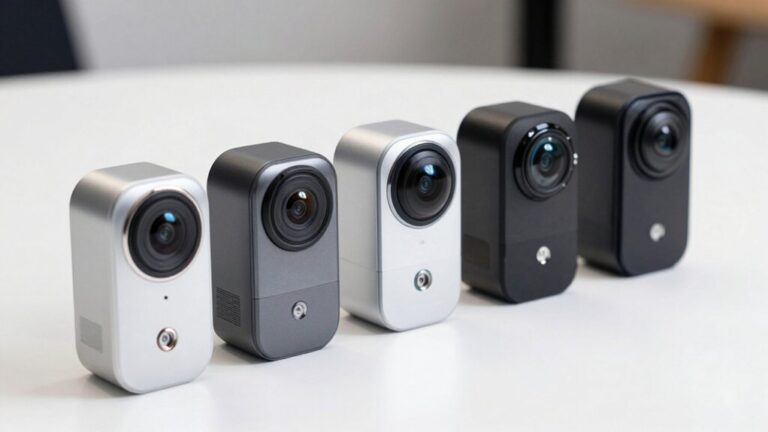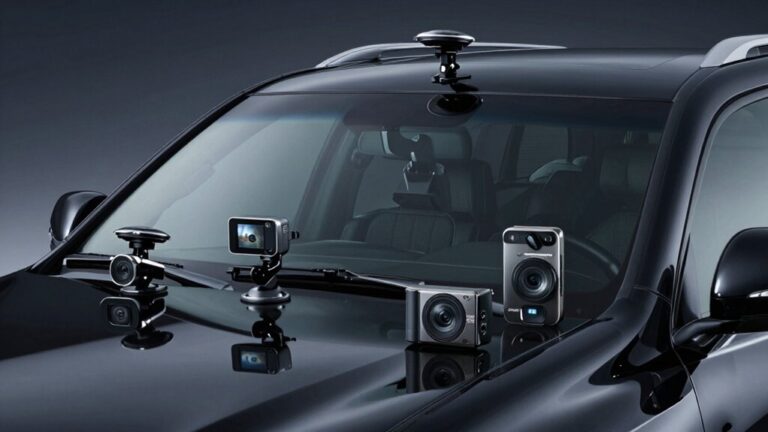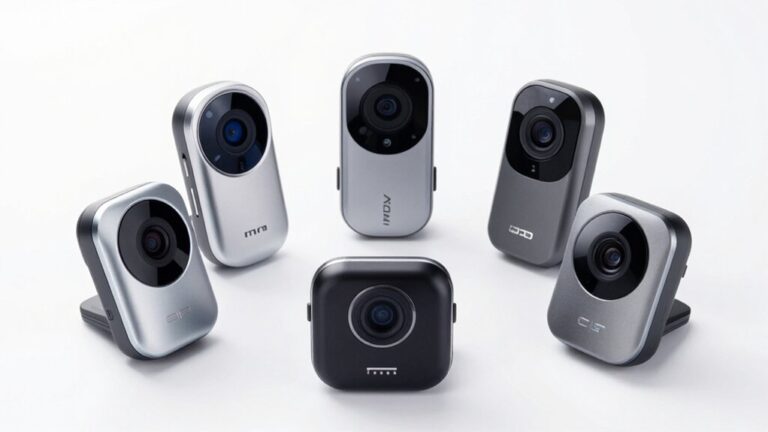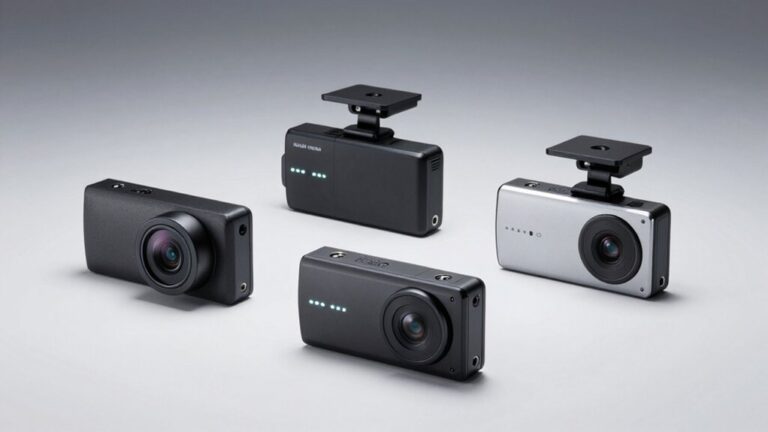

Yes, dash cams greatly increase your vehicle’s security through continuous surveillance and evidentiary documentation. They deter theft and vandalism—fleet operators report up to 53% fewer incidents post-installation—while motion detection and parking modes capture criminal activity when you’re away. The footage serves as court-admissible evidence in liability disputes and accelerates insurance claims by 35%. Advanced features like dual-facing cameras, AI detection, and G-force sensors create extensive protection that transforms your vehicle into a monitored asset with measurable risk reduction benefits you’ll uncover throughout this analysis.
How Dash Cams Provide Indisputable Evidence in Accident Cases
When accidents occur, conflicting witness statements and fading memories often obscure the truth, leaving investigators and insurers struggling to determine fault. Your dash cam provides an unbiased digital record that captures critical details—vehicle speed, lane changes, driver behavior, and road conditions—often missed in subjective accounts. This footage serves forensic experts during accident reconstruction, offering time-aligned visual data to corroborate physical evidence. You’ll find that insurance companies prioritize dash cam evidence to assess liability quickly, reducing claim processing time by up to 22% in fraud cases. Among dash cam owners, 20% found their footage helpful for insurance claims while 12% used recordings to support legal cases. The legal implications are significant: courts accept this footage to support or refute claims, strengthening your position when wrongful accusations arise. By helping to prove you were not at fault, dash cam evidence can prevent wrongful liability claims and protect you from undeserved premium increases. Dash cams are particularly effective at exposing crash-for-cash schemes where fraudsters deliberately stage collisions to file false insurance claims. This objective video evidence reduces reliance on potentially unreliable eyewitness testimony, making claims fairer and often quicker to resolve. Beyond accident documentation, dash cams with continuous monitoring capabilities can record incidents of vandalism or hit-and-run events even while your vehicle is parked. Your dash cam fundamentally functions as an impartial witness that never forgets.
The Role of Dash Cams in Deterring Theft and Vandalism
Beyond documenting collisions, your dash cam actively protects your vehicle during the hours it sits unattended. Dash cam technology equipped with motion detection captures vandalism and theft attempts, creating objective evidence for insurance claims and police investigations. The visible presence triggers criminal psychology’s risk-aversion mechanisms—potential perpetrators avoid vehicles displaying recording devices to prevent identification.
Fleet operators report considerable security improvements: some documented 53% incident reductions following installation. Your parked-mode dash cam with event-triggered recording provides continuous surveillance, while real-time telematics integration enables immediate security responses when suspicious activity occurs. Newer models incorporate G-force sensors that detect impacts and automatically preserve footage of tampering or collision events. When combined with car alarm systems, dash cams offer enhanced security by documenting real-time incidents and notifying owners of tampering. Dual-facing dash cams provide comprehensive security coverage by simultaneously monitoring both the interior and exterior of your vehicle, deterring theft while documenting any unauthorized access attempts.
Insurance providers recognize this risk mitigation through premium discounts. High-quality systems featuring night vision and multi-angle coverage maximize deterrent effects. Advanced models with AI motion detection and auto-tracking capabilities provide enhanced surveillance by automatically following movement around your vehicle during parking mode. Premium systems offering 4K video resolution deliver superior image clarity that captures critical details like license plates and facial features during security incidents. Modern Wi-Fi connectivity enables you to instantly review parking mode alerts and download incident footage directly to your smartphone without removing the SD card. The recorded footage’s detailed timestamps and contextual data strengthen both legal proceedings and claim validation, reducing dispute durations markedly.
Reducing Fraudulent Insurance Claims With Video Documentation
Insurance fraud through staged accidents and fabricated claims costs the industry billions annually, directly impacting your premiums through inflated operational expenses. Dash cams serve as critical fraud detection tools by providing indisputable video evidence that documents the actual sequence of events. Your footage enables claim verification by identifying staged scenarios like “right turn drive down” and “curb drive down,” exposing deliberate fraud attempts that constitute 80% of motor insurance fraud cases.
Claims supported by dash cam evidence settle 35% faster, reducing administrative costs and preventing drawn-out disputes. Insurance companies increasingly offer premium discounts for dash cam installation, recognizing the measurable decrease in bogus claims. You’re protected from false accusations and costly liability for accidents you didn’t cause, while insurers gain accurate data for claim assessment and fraud prevention. This objective evidence can also be used by law enforcement to resolve disputes fairly and hold aggressive drivers accountable. For the footage to be admissible, it must be relevant, authentic, and unaltered to ensure its validity in legal proceedings. Before submitting dash cam videos to your insurer, consult a lawyer to ensure proper authentication and understand how the footage might affect your case.
Widespread dashcam adoption improves overall road safety by deterring criminals who fear being recorded on video. The reduced fraud attempts translate to lower operational costs for insurance companies, creating potential savings that can be passed on to policyholders through reduced premiums. Dash cams function as a reliable silent witness by capturing clear video footage that provides an unbiased account of what actually occurred during roadway incidents. Models with parking mode features automatically activate upon detecting suspicious movements or impacts, recording incidents even when your vehicle is unattended.
Impact on Driver Behavior and Safety Performance
While dash cams provide essential documentation for post-incident analysis, their most significant security benefit emerges through behavior modification that prevents accidents before they occur. Your awareness of continuous recording promotes driver accountability, reducing risky practices like speeding and distracted driving. AI-powered systems detect unsafe behaviors—phone use, harsh braking, fatigue—and issue real-time alerts enabling immediate self-correction. Fleet studies demonstrate that video-based coaching reduces fatal crashes by 20% and injury crashes by 35%. The psychological impact proves substantial: you’re more likely to maintain defensive driving techniques when monitored. Video data identifies repetitive unsafe patterns, enabling targeted interventions before incidents occur. This proactive approach transforms dash cams from passive recording devices into active safety systems that measurably reduce crash rates and severity. Models with 4K resolution deliver superior license plate capture and incident documentation, ensuring critical details remain visible even in challenging lighting conditions. Advanced models with parking mode features extend this protection beyond active driving, activating recording upon motion or impact detection to capture incidents like vandalism or hit-and-runs while your vehicle is unattended. Systems equipped with Forward Collision Warnings and Lane Departure Warnings use computer vision to analyze the driving environment and provide timely alerts that help drivers avoid potential hazards. Dual-facing dashcams also serve as powerful tools for driver retention and recognition, highlighting positive driving behavior that often goes unreported to management and fostering a culture of safety and excellence. For maximum privacy and reliability, hidden car cameras that record directly to local storage eliminate dependency on internet connectivity while providing discreet vehicle monitoring capabilities. Vehicles requiring rear visibility enhancements benefit from wired backup cameras that provide stable, high-definition video feeds with minimal latency through direct connections, ensuring consistent performance in all weather conditions.
Financial Benefits: Insurance Discounts and Premium Savings
Your dash cam investment delivers quantifiable financial returns primarily through accelerated claims resolution and fraud prevention rather than direct insurance discounts. While Branch Insurance offers 8% insurance savings for Nextbase users, most U.S. personal auto insurers don’t provide explicit discounts. Commercial fleets achieve 5-30% premium reduction when combining dash cams with telematics data.
Your actual savings materialize through avoided at-fault surcharges—dash cam evidence protects against fraudulent claims that would otherwise increase your premiums by 20-40%. Fleet operators document 15% average premium reductions, with 41% reporting decreased claim frequency. Video evidence reduces administrative costs by expediting fault determination, eliminating prolonged investigations. Dash cams provide real-time video evidence that helps insurers assess incidents more accurately. Modern dash cams use loop recording to ensure continuous footage availability by automatically overwriting the oldest segments when storage is full. While you generally aren’t required to proactively disclose your dash cam to insurers, providing relevant footage during the claims process can significantly strengthen your position and accelerate resolution.
Telematics-integrated dash cams yield maximum returns: AI-powered systems reduce incidents 30% annually, translating to sustained premium advantages through demonstrated risk reduction and behavioral improvement. Top-rated models like the Viofo A329S deliver excellent image quality that ensures your footage provides clear, compelling evidence when you need it most. Proper windshield placement behind the rearview mirror helps maintain unobstructed views while capturing comprehensive road coverage that insurers value during claim evaluations. Models with capacitors instead of batteries offer superior longevity and reliable performance in extreme temperature conditions that can compromise traditional battery-powered units.
Exonerating Drivers and Reducing Legal Liability
When liability disputes escalate to litigation, dash cam footage functions as your most defensible evidence—courts accept authenticated video recordings that demonstrate actual driving behavior, road conditions, and collision dynamics without the ambiguity inherent in witness testimony. Your exoneration strategies strengthen considerably when video disproves false claims, including staged “swoop and squat” scams that target commercial drivers. This liability mitigation reduces exposure to nuclear verdicts and inflated settlements by providing concrete proof against exaggerated allegations. However, failure to preserve or review dash cam data increases your legal vulnerability—ignored safety alerts from repeated unsafe driving create evidence of negligence. The footage can clearly show traffic violations such as running red lights, illegal turns, distracted driving, or reckless behavior, which helps demonstrate the other driver’s fault in both insurance claims and court. Modern dash cams with GPS tracking capabilities automatically log your exact driving routes and speed, creating time-stamped location data that corroborates video evidence and strengthens your legal position. Claims supported by dash cam footage settle approximately 35% faster, reducing litigation costs while accelerating claim resolution and protecting your reputation from wrongful fault attribution. FMCSA regulations mandate proper data preservation of dashcam footage alongside ELD records, ensuring compliance during audits and legal proceedings. Legal acceptance requires establishing a clear chain of custody and verification that the footage remains unaltered, often necessitating testimony to authenticate the evidence before submission. While dash cams remain legal in all 50 states, their evidentiary value depends on compliance with state-specific mounting and recording regulations that govern admissibility in court. Budget dash cams with poor nighttime video quality may compromise evidence effectiveness during low-light accident scenarios, potentially weakening your legal position when incidents occur after dark.
Advanced Features: AI, Telematics, and Multi-Channel Recording
Modern AI-powered dash cams transform passive recording devices into active risk-mitigation systems through computer vision algorithms that detect distracted driving, drowsiness, tailgating, and seat belt violations in real time. This cutting edge technology delivers immediate audio alerts, enabling drivers to correct dangerous behaviors before accidents occur. You’ll benefit from proactive monitoring that analyzes behavior continuously, linking current actions to future collision risks through predictive analytics.
Integration with fleet telematics platforms creates unified oversight of driver behavior, vehicle location, and maintenance data. Multi-channel recording captures simultaneous forward road view and cabin footage, providing thorough incident context. Cloud connectivity enables automatic safety event uploads, while dual-facing cameras support detailed evidence collection for investigations. The time-stamped documentation provided by dash cams proves invaluable in hit-and-run cases, helping law enforcement identify fleeing vehicles and establish fault through objective video evidence. Advanced features including collision warnings and lane departure alerts prevent accidents proactively, fundamentally transforming vehicle security from reactive documentation to predictive risk prevention. The market for these AI-powered systems is experiencing substantial expansion, with the industry projected to grow at a CAGR of 16.60% through 2032, driven by increasing demand for enhanced road safety and fleet management efficiency.
Growing Adoption Rates Among Private Drivers and Commercial Fleets
The dash cam market has reached a critical inflection point, with 30% of U.S. drivers now operating vehicles equipped with these devices—a penetration rate that reflects fundamental shifts in driver risk awareness and liability concerns. Private driver adoption concentrates among high-exposure segments: gig workers (53%), urban operators (40%), and high-mileage commuters driving 5+ hours weekly (41%). Commercial fleets demonstrate even stronger uptake, with larger operations achieving 56% penetration versus 24% among smaller fleets. This disparity creates measurable compliance vulnerabilities. AI-enabled installations have reduced crash rates by 73% in monitored fleets, quantifying the security value proposition. Factory-installed dash cams receive support from 70% of all drivers, with backing strongest among younger and urban demographics who view the technology as a standard safety feature. With 57.8 million non-owners planning purchases within 12 months—led by Gen Z buyers at 45%—dash cam market trends indicate accelerating mainstream integration driven by evidence-based risk mitigation strategies.