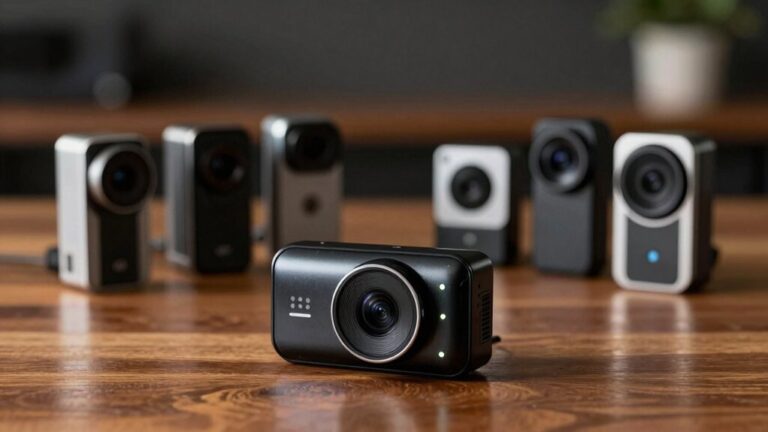

You’ll find the Thinkware U3000 leads the 2024 parking surveillance category with its radar-based motion detection that extends recording up to 40 days when paired with external battery packs. The Viofo A229 Pro delivers front 4K quality with buffered pre-event capture, while Blackvue DR970X Plus LTE provides instant cellular alerts when threats are detected. These systems draw just 400-600 mAh during parking mode and use G-sensor triggers to minimize false alerts while capturing 10+ seconds before incidents occur, ensuring you’ve got extensive protection details waiting below.
Top Models With Advanced Parking Mode Technology
When your vehicle is parked and unattended, advanced dash cams equipped with radar-based parking mode technology offer the most sophisticated protection against hit-and-run incidents and vandalism. The Thinkware U3000 stands alone in dash cam reviews as the only mainstream model featuring radar parking mode, which detects nearby motion while minimizing power consumption. User experiences confirm this system extends recording capacity up to 40 days when paired with external battery packs, far surpassing traditional motion-detection models. The radar sensor intelligently triggers recordings only when necessary, capturing 10 seconds before and after each event through buffered video. Multi-channel systems like the Botslab G980H complement this technology with 360-degree four-channel coverage, providing synchronized buffered recording across front, rear, cabin, and side cameras for extensive vehicle surveillance. Modern hard-wiring kits include protective features that prevent car battery depletion while maintaining continuous parking mode operation. Most modern dash cams allow you to review parking mode footage remotely by connecting your smartphone to the camera’s Wi-Fi network through the dedicated app. Unlike traditional ignition-based models that stop recording when the car is off, these hardwired dash cams enable continuous monitoring to capture vandalism and other incidents while parked. Some advanced models offer time-lapse recording as an alternative mode that captures frames at reduced intervals to minimize storage requirements while maintaining extended surveillance coverage. Mirror-style dash cams with GPS tracking provide additional location data that helps verify where and when parking mode incidents occurred. This unbiased legal evidence proves invaluable when supporting insurance claims and protecting drivers from fraudulent disputes in parking lot environments where eyewitnesses are rarely available.
Video Quality and Multi-Channel Recording Capabilities
For thorough coverage, multi-channel systems like the Viofo A229 Pro provide simultaneous front 4K, interior, and rear recording—essential for documenting incidents from multiple angles. The Vantrue N4 Pro offers three-channel 1080p recording with firmware-enhanced HDR across all cameras, reducing motion blur during low-light parking mode events. The Thinkware U3000 stands out with its radar motion detection, which activates recording when movement is sensed near the parked vehicle. The Rexing DT2 delivers dual channel Full HD 1080p recording with a 170° ultra-wide lens and accident auto-detection via built-in G-sensor, making it a solid starter option for parking surveillance. For budget-conscious drivers seeking parking surveillance, the Z-Edge Z3Pro offers dual front and rear cameras with built-in Wi-Fi for convenient footage review without breaking the bank. The 70mai 4K T800 features three-channel 4K recording with a battery-pack option that prevents draining your car’s battery during extended parking mode monitoring. If you park in extreme cold climates, look for models with supercapacitors instead of batteries, as they maintain reliable performance in freezing temperatures where traditional lithium-ion batteries often fail. While 360-degree options like the 70Mai E360 maximize field of view, their fisheye distortion sacrifices distance detail recognition compared to dedicated multi-camera configurations. When installing your dash cam, ensure it complies with mounting location laws that typically require placement behind the rearview mirror to avoid obstructing your view.
Radar Detection and Motion Sensing Features
Advanced parking surveillance separates premium dash cams from basic models, with radar and motion detection determining how effectively your camera captures incidents when you’re away from the vehicle.
The Thinkware U3000 stands alone in offering radar-based parking mode, using front and rear transmitters to detect nearby people and vehicles while minimizing power consumption. Radar advantages include extended surveillance periods up to 40 days with battery packs and superior event capture accuracy compared to traditional motion sensors.
Standard motion sensing systems from BlackVue and Thinkware use vibration and image sensors to trigger recording, though motion sensitivity requires careful adjustment to prevent false alerts that drain batteries and fill storage unnecessarily. Some models like the Thinkware Q800PRO combine reliable ADAS functions with parking surveillance for comprehensive vehicle protection. Loop recording ensures continuous footage capture by automatically overwriting the oldest files when storage reaches capacity. Premium models featuring G-sensor collision detection can immediately identify impacts and protect critical footage from being overwritten. The Thinkware U3000 also offers cloud remote monitoring capabilities, allowing you to check on your vehicle remotely and receive alerts when incidents are detected. The Nextbase iQ enhances parking protection with emergency SOS with crash detection that automatically triggers alerts when impacts occur.
Impact detection speed matters—the U3000 activates recording within one second of collision, ensuring buffered footage captures ten seconds before and after incidents. This objective video evidence proves invaluable for defending against staged accidents and fraudulent insurance claims when your vehicle is targeted while parked.
Power Management and Extended Battery Solutions
Power management capabilities determine whether your dash cam protects your vehicle or leaves you stranded with a dead battery****, making this specification as critical as video quality when selecting parking surveillance systems.
Most dash cams draw 400-600 mAh during parking mode, requiring careful power optimization. Thinkware U1000 exemplifies superior battery efficiency through timelapse recording and selective feature shutdown, preserving your vehicle’s charge during extended parking. Hardwired installations demand voltage cutoff mechanisms that disconnect power below preset thresholds, preventing battery depletion.
External battery packs from Matrack and Motive deliver multi-day parking surveillance independence, incorporating temperature regulation and controlled discharge rates. These lithium-ion solutions eliminate vehicle battery drain while maintaining AI-powered monitoring capabilities. Battery-powered models offer flexible installation without requiring constant power sources, making them ideal for vehicles without accessible wiring or temporary surveillance needs.
Optimize runtime by selecting motion-activated or timelapse modes instead of continuous recording, disabling cloud uploads, and utilizing automatic shutdown features that activate during inactivity periods. Advanced dash cams incorporate G-Sensor technology that automatically locks critical footage when detecting impacts during parking mode, ensuring crucial evidence remains protected. The Thinkware U3000 features buffered parking recording that captures footage before and after detected events, providing complete context for parking incidents. BlackVue dash cams with year-long parking protection include advanced power management that works seamlessly with external battery packs to provide continuous security monitoring without compromising your vehicle’s battery. The ARIFAYZ-Q4 offers parking mode with collision detection for 24-hour surveillance, combining 4K front recording with built-in WiFi for remote monitoring. For drivers seeking maximum reliability, wired backup cameras provide stable video feed with minimal latency through direct connections, ensuring consistent performance in all weather conditions.
Buffered Recording and Pre-Event Capture
Buffered recording transforms parking surveillance from reactive documentation to thorough incident reconstruction****, continuously storing temporary footage that becomes permanent when your dash cam detects motion or impact. This technology typically captures 10+ seconds before the triggering event, providing critical context for event analysis that shows what led to the incident.
Models like the Viofo A229 Pro and Thinkware U3000 excel at buffered parking mode, combining G-sensor triggers with motion detection to activate evidence preservation automatically. You’ll benefit from reduced storage consumption since only relevant pre- and post-event clips are saved rather than continuous recording.
The buffered approach proves invaluable for hit-and-run scenarios where causality isn’t immediately visible. Advanced systems integrate radar sensors and AI-powered motion detection, minimizing false triggers while ensuring genuine threats are captured with full contextual footage. Premium options like the Blackvue DR970X-2CH LTE Plus offer cloud integration that enables remote access to buffered parking clips from your smartphone. Recording systems utilize loop recording functionality to automatically overwrite old files when storage reaches capacity, ensuring your dash cam never stops capturing critical parking incidents.
Smart Alerts and Cloud Connectivity Options
Real-time incident awareness separates modern dash cams from passive recording devices, with smart alert systems that instantly notify you when your parked vehicle experiences motion, impact, or nearby threats. Models like Blackvue DR970X Plus LTE deliver smart notifications through integrated cellular connectivity, enabling immediate awareness without requiring separate hotspots. These systems classify events by severity—distinguishing minor motion from vandalism or collision—so you’ll receive prioritized alerts for critical incidents.
Cloud accessibility transforms parking surveillance by enabling remote live view and automatic footage sync to online storage, protecting evidence even if physical storage is compromised. Thinkware U3000 combines cloud monitoring with radar-based detection, triggering recordings only when necessary. When the dash cam’s G-sensor detects a crash or sudden movement, it automatically saves and uploads the footage to secure cloud servers, ensuring the video remains accessible even if the dash cam is damaged or stolen. Advanced implementations offer GPS tracking, geofencing alerts, and over-the-air firmware updates, ensuring your parking protection evolves continuously. Premium options like the Viofo A229 Pro offer excellent 4K video with cloud backup features that safeguard critical parking mode recordings. Fleet-focused solutions like Samsara’s dash cams provide cloud-uploaded footage with GPS tagging for comprehensive incident documentation and driver protection. High-end systems now incorporate machine vision with AI to achieve superior risk detection accuracy, analyzing parking footage for specific threats like approaching pedestrians or unusual movement patterns. For enhanced convenience, many top dash cams now include mobile app integration that allows you to review parking mode footage directly from your smartphone. All cameras require hardwiring to activate parking mode functionality, transforming standard power outlets into reliable surveillance infrastructure.
Temperature Durability and Climate Performance
While advanced features attract attention, extreme temperatures silently destroy dash cams that lack proper thermal engineering****, making climate durability the most critical—yet overlooked—factor in long-term reliability.
Superior heat resistance demands capacitor-based power systems over lithium-ion batteries, preventing swelling and degradation when interior temperatures exceed 172°F. You’ll need models specifying operating ranges between -20°C and 65°C for true climate versatility across seasons.
Adhesive mounts outperform suction cups in extreme heat, maintaining secure attachment when temperatures soften traditional mounting systems. Advanced sensors like Sony Starvis 2 guarantee stable video quality during thermal stress, while 2K resolution generates less internal heat than 4K alternatives.
Parking mode efficiency matters—look for 2-milliamp current draw and super capacitor technology that sustains operation without heat-induced shutdowns during extended summer parking. Heat-resistant casings with minimal plastic components enhance durability when dash cams face direct sunlight throughout the day. Strategic placement behind the rearview mirror minimizes direct sunlight exposure and reduces the risk of overheating that can cause temporary shutdown or internal damage. Models like the Rexing DT2 combine 24/7 parking monitoring with accident auto-detection and loop recording to ensure continuous protection regardless of climate conditions. Premium options with HDR support deliver superior image quality in challenging lighting conditions while maintaining thermal stability during extended operation. Understanding windshield obstruction rules ensures your dash cam remains legally compliant while positioned for optimal thermal protection.
GPS Integration and Additional Security Functions
GPS functionality transforms dash cams from passive recorders into intelligent documentation systems**, automatically embedding coordinates, speed data, and precise timestamps into every video file for irrefutable incident verification. GPS advantages extend beyond location tracking—advanced models like the Nextbase 622GW incorporate What3Words geolocation for emergency response precision, while fleet-oriented cameras leverage route optimization** and driver performance analytics.
Additional security functionalities enhance protection during parking: LTE-connected units such as Verizon Connect’s dash cam transmit real-time alerts to mobile devices, while AI-powered systems detect motion, impacts, and tampering attempts. Dual-facing configurations monitor both road and cabin simultaneously. Cloud integration guarantees instant footage backup and remote access, eliminating data loss risks. Voice notification systems and buffered recording capture pre-event footage, creating all-encompassing surveillance ecosystems that protect vehicles around the clock. Advanced dash cams with facial recognition technology can identify driver fatigue and distraction patterns, delivering audio alerts to prevent accidents before they occur.